Amsterdam-Zuidoost | Living
‘Zuidoost has the potential. Now we need to keep building on it’
Robert Kohsiek | Wonam
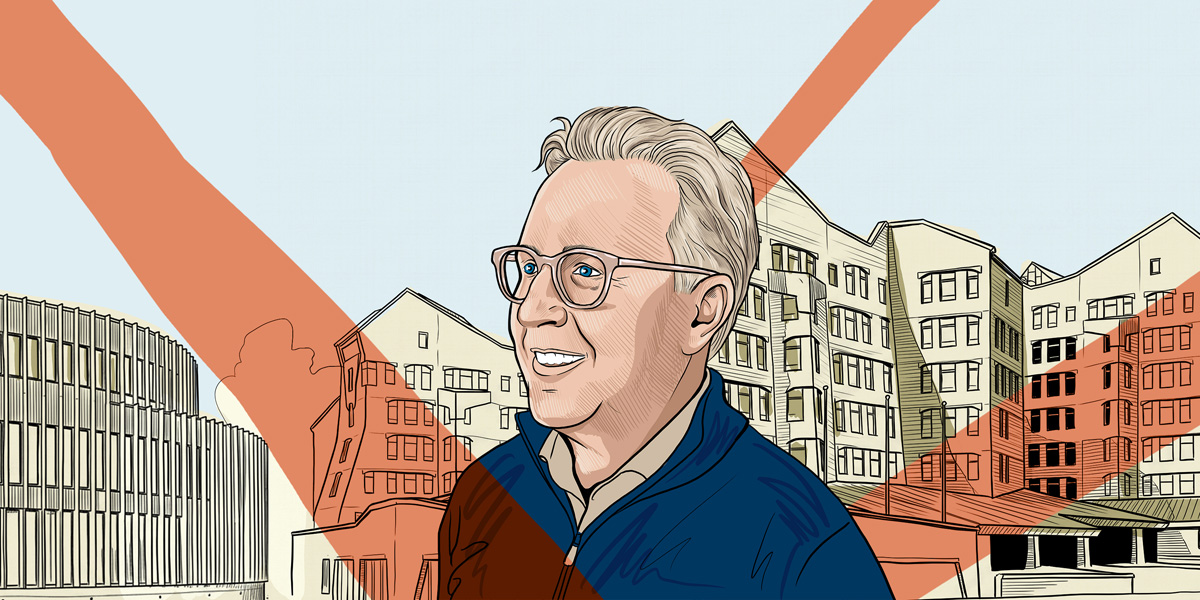
Robert Kohsiek, director of Wonam, recognized Amsterdam-Zuidoost’s potential early on. Today, he sees that conviction increasingly borne out: large numbers of new homes, major organizations deliberately choosing the area, housing and employment moving closer together, and excellent accessibility. But for Robert, the transformation is far from complete. ‘Zuidoost has enormous potential. Now is the time to turn that potential into reality.’
As a residential developer and investor, he is actively working to help make that happen. And his focus deliberately extends beyond his own buildings. What happens at street level, the amenities people have access to, and how an area is managed ultimately determine whether people enjoy living, working, and spending time there. ‘As a property owner, you can’t just stop caring at the edge of your property.’
An underestimated position
Robert’s interest in Zuidoost began with its infrastructure. He comes from a family with a background in the rail industry and has a habit whenever he visits a city: he takes the subway. ‘Follow the subway lines and you’ll often find the places with the greatest potential for real estate development.’ That same approach led him to Zuidoost. ‘With two highways, an intercity rail station, and two metro lines, the area has a strategic position that is still widely underestimated.’
Changing without losing what makes it unique
But great connections alone don’t make a city, Robert emphasizes. As Zuidoost continues to grow, he sees the challenge shifting: from creating a highly accessible area to creating a place where people actually want to stay. ‘That requires a mixed-use urban district. New homes bring new residents, and that inevitably changes Zuidoost.’
‘As a property owner, you can’t just stop caring at the edge of your property.’
For Robert, however, change doesn’t mean losing what is already there. He believes the Bijlmer’s distinctive architecture is worth preserving. The area’s existing cultural institutions and activities also contribute to its identity, from Omroep Zwart and NPO FunX to jazz concerts on the ground floor of Zandkasteel.
Robert also believes the area needs a diverse mix of housing, including market-rate homes. In his view, focusing too heavily on any one housing segment won’t create the kind of urban mix Zuidoost needs.
Ground-floor spaces as the missing link
That urban mix is shaped not only by who lives in the area, but also by what happens at street level. Robert therefore believes more attention needs to be paid to how ground-floor spaces are used. ‘Vacant spaces don’t necessarily mean there’s no demand for amenities. The problem is that these spaces are sometimes delivered as unfinished shells, and the cost of making them ready for use can be too high for smaller entrepreneurs.’
‘With two highways, an intercity rail station, and two metro lines, the area has a strategic position that is still widely underestimated.’
He sees an opportunity here for the municipality or a public-private fund to take a more active role. Such an organization could acquire ground-floor commercial spaces, fit them out, and lease them strategically to help create a healthy mix of amenities. Property owners also have a responsibility, he says. ‘Even after construction is complete, someone has to take responsibility for how the area functions.’
Ultimately, for Robert, it comes down to making Zuidoost attractive as a whole. He wants people to come to the area because they choose to, not simply because they need to be there. ‘It really needs to become a destination in its own right.’
Stop planning and start doing
That brings Robert back to what he sees as Zuidoost’s most important challenge. The foundations are in place. Now the area needs to take the next step. ‘What matters now is maintaining momentum and actually turning ideas into action. Create flexibility within the policy framework, and keep trying, even when not every idea gets off the ground.’
‘Even after construction is complete, someone has to take responsibility for how the area functions.’
He tries to put that philosophy into practice himself. Robert has worked with IMC Weekend School, explored opportunities to bring more educational programs to Zuidoost, and openly talks about his ambition to bring new restaurants and other amenities to the area. ‘Not everything works out right away, but that doesn’t change my vision for the future. Ten to fifteen years from now, I see Zuidoost as a destination where housing, work, amenities, and events are much more closely connected.’