Amsterdam-Zuidoost | Living
‘We’re building a city, not just homes’
Nicole de Vrij | Eigen Haard
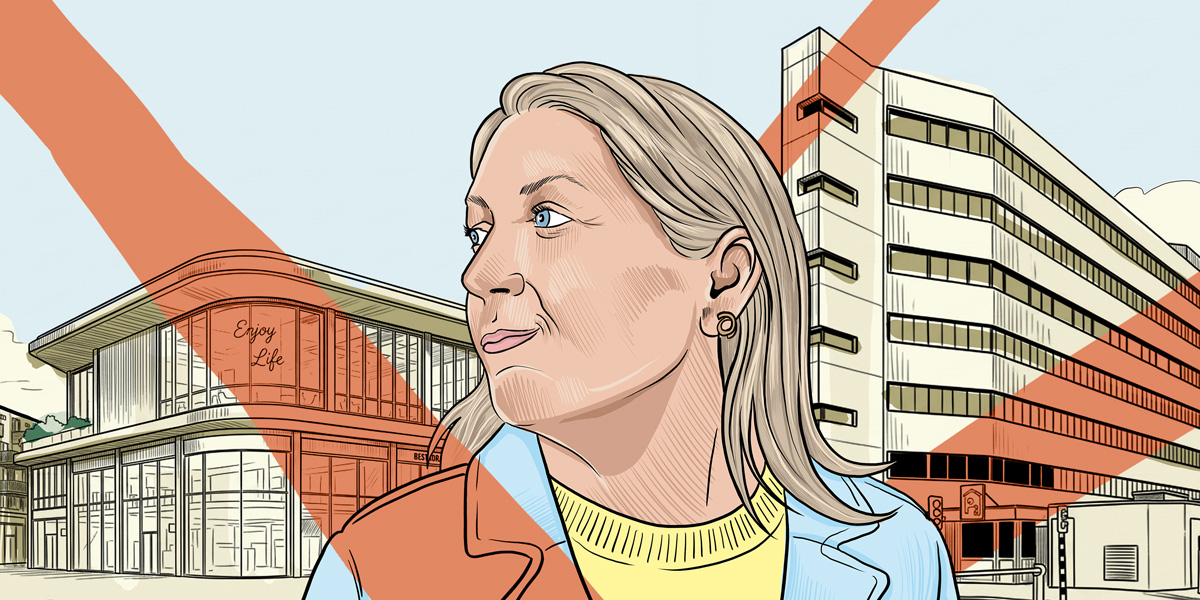
As director of Real Estate Projects and Management at Eigen Haard, Nicole de Vrij sees the challenge in Amsterdam-Zuidoost as about more than housing. After all, thousands of new homes don’t automatically create a complete city. What matters is the people who live there. ‘Can you go to school there? Is there employment, and are there amenities? Is it green, safe and accessible? In short: do people feel at home?’
That broader view also shapes how Eigen Haard sees its own role. Not every choice that is good for a neighborhood is the most financially attractive. ‘Yet those choices are necessary to make room for different groups of residents and ensure that existing neighborhoods benefit from that growth too,’ says Nicole. ‘We’re not just stacking bricks; we’re building a city.’
Investing differently to create equal opportunities
Nicole sums up Eigen Haard’s philosophy in Zuidoost as ‘investing differently to create equal opportunities.’ By that, she means that not every neighborhood needs the same thing. ‘Sometimes you deliberately invest more to give residents the same opportunities as people in other parts of the city.’
‘Sometimes you deliberately invest more to give residents the same opportunities as people in other parts of the city.’
You can see this at street level, for example. In new developments, Eigen Haard carefully considers how the ground-floor spaces are used. Alongside commercial tenants, there is room for social services, healthcare and education, as well as spaces for start-ups and emerging entrepreneurs. ‘So the question isn’t just which tenant makes the most financial sense, but above all what that tenant brings to the neighborhood.’
You can see this at street level, for example. In new developments, Eigen Haard carefully considers how the ground-floor spaces are used. Alongside commercial tenants, there is room for social services, healthcare and education, as well as spaces for start-ups and emerging entrepreneurs. ‘So the question isn’t just which tenant makes the most financial sense, but above all what that tenant brings to the neighborhood.’
Room for different life stages
The same thinking applies to housing. Nicole believes it’s important for Zuidoost to offer homes for different types of households and stages of life. ‘That also means providing enough larger homes for families, even if they’re less financially attractive to build. If you focus solely on the business case, you end up building only small homes.’
It’s not just about new construction, though. Eigen Haard also helps residents move to homes that better match their changing needs. Two housing mobility advisors help residents find a home that better suits their stage of life. ‘Keeping people moving within the housing market is essential to making sure they live in homes that suit their needs.’
The Jade project in Reigersbos is a good example. The building consists of 48 apartments for seniors and seven studios. ‘Residents move from larger homes in the neighborhood to smaller, newly built homes in Jade, with additional amenities for seniors. The project was developed in consultation with a group of future residents to make sure it meets their needs.’
‘Creating a mixed city requires making deliberate choices about the types of homes you build.’
For Nicole, this is also about a neighborhood’s social cohesion. ‘If you mainly build small apartments, that also determines who can and can’t live in a neighborhood. Creating a mixed city requires making deliberate choices about the types of homes you build.’
More than just housing
But a suitable home isn’t enough to keep people in an area. Nicole points to education as an example. New homes are often developed faster than the amenities families need. ‘What do the people who come to live here need?’ is a fundamental question for her. ‘If children have to leave the borough to go to school, that can ultimately be a reason for families to leave.’
Public space also deserves more attention. Nicole sees opportunities to reduce heat stress and improve quality of life by adding more green space. Around Nelson Mandelapark, Eigen Haard is working on a large mass-timber development with about 300 social rental homes. Safety in the neighborhood is also part of the equation: homes, vibrant ground-floor spaces and more activity around the park create more ‘eyes on the street.’
Bringing both sides closer together
Another challenge is connecting the two sides of the railway. According to Nicole, they are not sufficiently connected. ‘We want residents of the existing neighborhoods on the east side to benefit from the new developments and amenities on the west side as well. That’s why we take the needs of current residents into account when developing new housing in Amstel III. Better, more attractive routes can help strengthen that connection.’
The renewal plans for Holendrecht are a good example. A new station square, the redevelopment of Holendrechtplein and improvements to public space should strengthen the connection between the existing neighborhood and Amstel III. The expansion of the shopping center, along with new community facilities, restaurants and cafés, should also help create a livelier center for residents on both sides of the railway.
‘A city has to make room for families and seniors, for living and working, and for education, entrepreneurship and places where people can come together.’
‘It isn’t just about making it easier to get to the other side,’ Nicole emphasizes. ‘It’s about giving existing and new residents access to the same amenities and creating opportunities for them to meet. That ultimately shapes how residents experience their neighborhood day to day.’
Building a complete city
When Nicole looks ten years ahead, she hopes many of the construction cranes now on the skyline will be gone because the plans have become reality. She pictures a Zuidoost with more green space, new architecture and better connections. But above all, a borough where growth has improved residents’ everyday lives.
She returns to the responsibility that developers and other stakeholders have today. ‘A city has to make room for families and seniors, for living and working, and for education, entrepreneurship and places where people can come together. Some of the choices needed to make that happen may not be the easiest in the short term. But if they contribute to a strong and livable city, we have to be willing to make them.’