Amsterdam-Zuidoost | Living
‘Quality of life is not shaped in buildings, but by the spaces between them’
Mark Kuijpers | Greystar
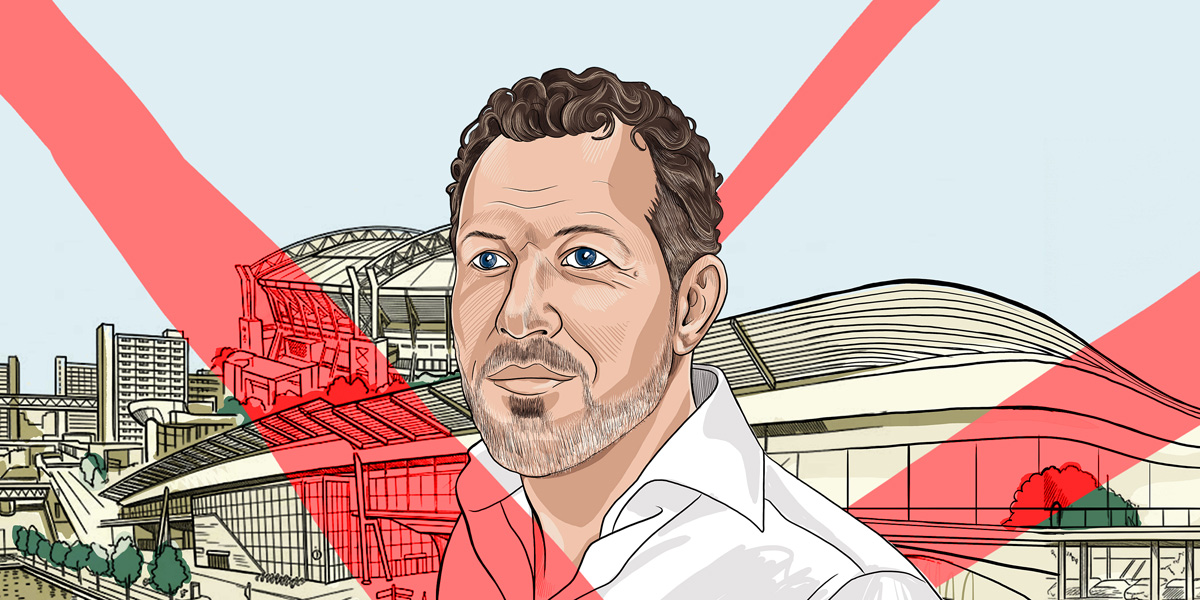
As Managing Director of Development at Greystar, Mark Kuijpers has witnessed the transformation of Amsterdam-Zuidoost firsthand. What was once an area that largely emptied after office hours, is now home to thousands of residents. As a result, the challenge is shifting from quantity to quality. ‘Creating a great living environment starts with looking at the everyday experience: what is happening within a 200-meter radius of a building?’
According to Mark, much of the large-scale transformation has already taken place. The next phase is about refinement and connection. ‘Zuidoost consists of several distinct subareas, each with its own character and dynamics. At the same time, the district is so large that these areas do not yet feel fully connected.’
A logical place for growth
Mark believes the timing is right to build on the momentum. The arrival of thousands of new homes is creating, for the first time, a critical mass of residents who use the area beyond traditional office hours. ‘That brings more life to the streets and creates demand for amenities and services.’
‘Residents feel connected to their building, but not yet strongly enough to Zuidoost as a whole.’
Within Amsterdam’s broader housing agenda, he sees Zuidoost as a logical location for further growth. Not only because of the available space, but also because the infrastructure is already in place. ‘Metro lines, rail connections and major roads make it possible to achieve a level of urban density that would be difficult to realize elsewhere.’
Scale creates opportunity
That was also one of the reasons why Greystar invested in the area at an early stage. The OurDomain Amsterdam-Zuidoost development offered something that is increasingly rare elsewhere in the city: scale. By delivering a large number of homes in one go, the project immediately created sufficient demand for supermarkets, restaurants, cafés and other everyday amenities.
Location was equally important. Close to Amsterdam UMC, adjacent to Holendrecht Station, and situated in an area with activity beyond working hours, Greystar saw an opportunity to create a neighborhood that would be attractive to residents from day one.
The demographic profile of the area has evolved gradually since then. While early developments focused primarily on students, young professionals and hospital employees, the emphasis is increasingly shifting towards first-time buyers and young families. ‘I see that as a sign of Zuidoost maturing as a residential area.’
The human scale
At the same time, Mark believes this represents the area’s greatest challenge. ‘Residents often feel strongly connected to their building and the community within it, but not yet to Zuidoost as a whole. That has very little to do with the homes themselves and everything to do with the surrounding environment.’
‘Successful urban living is not created on the drawing board; it is created at street level.’
He repeatedly refers to what he calls the ‘human scale’ of urban development: the quality of public space, the character of ground-floor uses, the availability of amenities and the experience residents have when they step outside their front door. According to Mark, these are the factors that ultimately determine whether people feel at home in a place.
‘Much of Zuidoost’s infrastructure was originally designed for large traffic flows, office buildings and events,’ he says. ‘Residential neighborhoods require different conditions. Successful urban living is not created on the drawing board; it is created at street level. That’s where people should be able to meet, sit down, grab a coffee or walk to nearby amenities.’
The importance of public space
This vision also explains why Mark places so much emphasis on the development of Hondsrugpark and other investments in public space. In his view, building homes is not the most difficult part. The real challenge lies in connecting all the individual developments into one cohesive and enjoyable place to stay.
Balancing residential quality with large-scale entertainment destinations can sometimes be challenging. Zuidoost is home to major venues such as the Johan Cruijff ArenA, Ziggo Dome and AFAS Live. These attract large numbers of visitors and traffic flows, while residents are primarily looking for comfort, quality of life and attractive public spaces. ‘Those interests do not have to conflict, provided existing facilities are used more intelligently.’
‘Small businesses can ultimately be far more valuable than maximizing rental income.’
Ground-floor spaces deserve particular attention, he argues. While developers often rely on high rents to support their business cases, Greystar takes a different approach. ‘For us, ground-floor space does not have to deliver the highest possible return, as long as it contributes to the quality of life in the neighborhood. Small businesses, cafés, restaurants and community services can ultimately be far more valuable than maximizing rental income.’
From pioneers to long-term residents
Greystar currently owns more than 3,000 homes in Zuidoost and, according to Mark, therefore has a responsibility to contribute to the area's future. That contribution extends well beyond developing buildings. “Community management, maintenance, safety, and ongoing engagement with local businesses, residents and the municipality are just as important in building a strong social network within the neighborhood.”
Looking ten years ahead, he expects Zuidoost to move beyond its pioneering phase. ‘Today’s residents are often people who consciously choose the opportunities the area offers. The question is whether they will ultimately stay.’
In his view, the answer will not be determined by the number of homes or the height of the buildings, but by the quality of the spaces between them. ‘If the public realm, local amenities and the human scale continue to improve, today’s pioneers will become tomorrow’s long-term residents.’