Amsterdam-Zuidoost | Leisure
‘Amsterdamse Poort will become Amsterdam’s second city center’
Lieske van Pelt | CBRE Investment Management
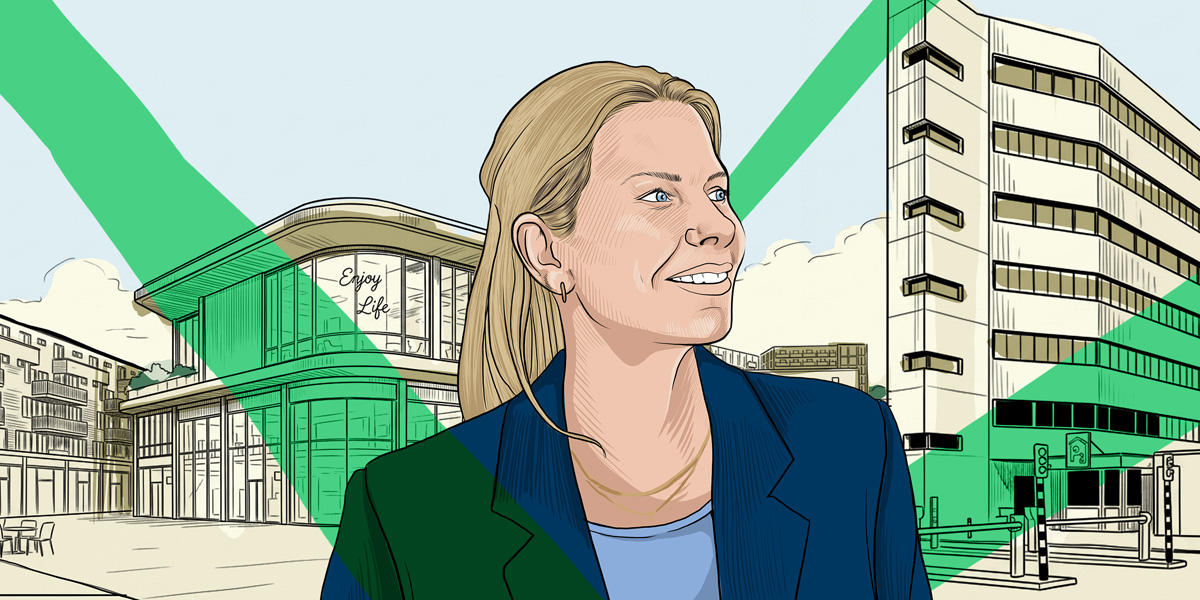
Lieske van Pelt’s first day working at Amsterdamse Poort coincided with the COVID-19 lockdown in March 2020. At the time, she encountered largely empty streets. Today, the picture looks very different. For more than six years, she has been closely involved in the area's redevelopment and positioning. Since its opening in 1986, Amsterdamse Poort has been owned by CBRE Investment Management. ‘We are transforming it from a shopping center into the heart of Amsterdam-Zuidoost, with an appeal that extends far beyond the district itself.’
To achieve that ambition, Amsterdamse Poort has been undergoing extensive change for some time. Alongside retail and food and beverage concepts, new functions are being added, including housing, culture, entertainment, education, sport and recreation. ‘We are making the area more sustainable, enhancing its appearance and increasing the amount of greenery, while upgrading the existing buildings. In some cases, we demolish outdated properties to make way for new developments.’
Distinctive qualities
The area is changing significantly, but its character must not be lost, Lieske stresses. Amsterdamse Poort should not become like every other city center. ‘Its strength lies precisely in the things that set it apart, such as streetwear brands with roots in Zuidoost and local food entrepreneurs.’ That is why, in her view, a standardized retail offering would not be the right fit for Amsterdamse Poort. ‘We do not want to become a copy of Amstelveen, Gelderlandplein or any of the other centers nearby. Instead, we want to preserve and strengthen the unique qualities that are part of Zuidoost’s identity.’
The connecting link
Today, the center sits between two quite distinct worlds. On one side of the railway line are predominantly offices and event venues, while the residential neighborhoods are located on the other. ‘Amsterdamse Poort can become the connecting link between those areas. That requires more than shops and restaurants. It also requires public spaces and programming that encourage people to meet and spend time together.’
‘We do not want to become a copy of other centers. Instead, we want to preserve and strengthen the unique qualities that are part of Zuidoost’
This connecting role will only become more important as Zuidoost continues to grow rapidly. ‘We see the potential for Amsterdamse Poort to evolve into Amsterdam’s second city center. To achieve that, the future offer must not only serve residents of Zuidoost, but also appeal to visitors from the wider Amsterdam region and places such as Almere, Purmerend, Hilversum and Utrecht.’
The right retail mix
When selecting new tenants, considerable attention is paid to quality and to whether a concept genuinely fits the character of the center. ‘Filling a vacant retail unit quickly is not automatically the best solution,’ she explains. ‘Creating the right retail mix requires careful curation, ensuring the offer remains distinctive and attractive over the long term.’
Culture and entertainment also play an important role. The redevelopment plans include a 3,500 square meter cultural hub that will accommodate evening, late-night, and children's programming. It fills a gap in the area's current scale: larger than the small venues already present, yet smaller than the major event destinations nearby.
‘Filling a vacant retail unit quickly is not automatically the best solution’
Lieske also sees opportunities for a venue built around hip-hop culture. ‘A place where performances continue late into the night aligns perfectly with Zuidoost’s cultural identity. Nothing of that scale currently exists elsewhere in Amsterdam.’
Staying longer
The addition of new functions, such as hospitality and cultural venues, is intended to encourage people to stay longer in the area. Average dwell time currently stands at 43 minutes. Lieske would like to increase that to around one and a half hours. ‘That can only happen if visitors can enjoy a meal here, meet friends or family, and attend cultural events.’
A vibrant evening program can also help ensure the area remains lively and welcoming after shops have closed. ‘That requires more than activities after six o’clock. It also requires improvements to, and investment in, the public realm.’
‘Creating vibrancy requires more than activities after six o’clock. It also requires improvements to, and investment in, the public realm.’
Lieske also highlights the importance of accessibility. ‘The station must be able to accommodate the area's continued growth, and parking solutions need to expand alongside it.’ At the same time, she sees mobility patterns changing in Zuidoost. ‘Cargo bikes and electric bicycles are now a common sight, but adequate parking facilities for them are still lacking.’
Political commitment
The ambitions for Amsterdamse Poort do not stand alone. Lieske sees significant opportunities for Zuidoost but emphasizes that continued progress cannot be taken for granted. ‘Ongoing attention and commitment to the district remain essential. Here, you can build on existing infrastructure and increase density relatively quickly. That opportunity does not exist everywhere in Amsterdam. I therefore hope the political commitment remains in place to support that development.’