Amsterdam-Zuidoost | Area Development
‘Mobility is the engine of Amsterdam-Zuidoost’
Joep Esser | NS
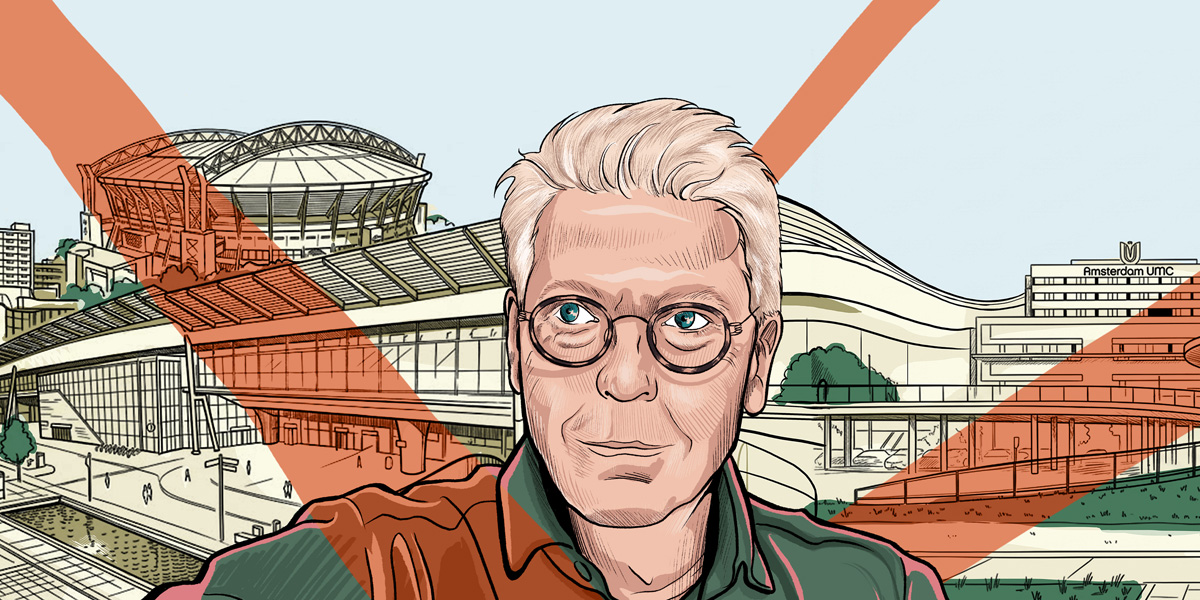
Anyone who speaks with Joep Esser about the transformation of Amsterdam-Zuidoost quickly realises that his perspective extends well beyond bricks and square metres. ‘A successful area emerges when the combination of housing, employment, amenities and accessibility is right,’ says the Development Manager at NS Stations. ‘Through our rail connections and stations, we make an important contribution to the accessibility of Southeast. In doing so, we help create the conditions for further social and economic development.’
According to Joep, Southeast benefits from an infrastructure network that few areas in the Netherlands can match. ‘With railway stations such as Amsterdam Bijlmer ArenA, Holendrecht and Duivendrecht, various metro and bus connections, and several major motorways, the area is well connected to both the city and the rest of the country. Mobility is the engine of Southeast.’
Accessibility supports transformation
Joep has been closely involved with the area for many years, including through his role on the Supervisory Board of Zuidoost City Foundation. Over time, he has seen the character of Southeast gradually evolve. ‘In recent years, a mixed urban environment has started to emerge: new homes are being added and ground-floor spaces are being repurposed. Living, working and amenities are becoming increasingly integrated.’
‘A successful area emerges when the combination of housing, employment, amenities and accessibility is right.’
This transformation aligns perfectly with the existing accessibility, according to Joep. People living in Southeast do not necessarily need to own a car. ‘Train, metro, bus and bicycle make it possible to get wherever you need to be in no time.’
From station to destination
The strength of NS Stations lies in its ability to connect mobility and urban development. Stations are not merely places where travellers arrive and depart; they are also meeting places that contribute to the liveability, economic vitality and attractiveness of their surroundings. As an example, Joep points to the large-scale development around Duivendrecht Station. NS, government authorities and private-sector partners are collaborating there on Amstelvoorde: a new urban district comprising 6,500 homes and 250,000 square metres of amenities.
Such a significant development requires a well-designed mobility strategy, Joep emphasises. The project builds on NS’s experience in Southeast, including managing large visitor flows around the Johan Cruijff ArenA, Ziggo Dome and AFAS Live. According to him, mobility should never be considered as an afterthought: It must be integrated into an area development from the very beginning.
The importance of ‘soft power’
Joep believes the greatest opportunity in Southeast lies in its largely unseen potential. ‘There is an enormous amount of knowledge in this area. Many startups grow into scale-ups and begin looking for space to expand. These businesses often employ young people who create energy and vibrancy comparable to that of a university city. It creates a surprisingly dynamic environment.’
‘Train, metro, bus and bicycle make it possible to get wherever you need to be in no time.’
Zuidoost is also home to an exceptionally diverse population, representing more than one hundred nationalities. Joep perceives this diversity as an economic advantage. ‘Different backgrounds, knowledge and entrepreneurial spirit come together here, but they can still be connected more effectively.’
Yet, accessibility is not enough to unlock that potential.‘We should not underestimate the importance of soft power in making an area successful.’ By soft power, he refers to everything required to turn buildings into a city: education, social amenities, culture, safety, public spaces and social cohesion.
‘The strength of Southeast lies not only in its excellent accessibility and real estate, but above all in its people, entrepreneurship and concentration of knowledge,’ he says. ‘The challenge is to connect those qualities so that the area's development genuinely benefits the people who live, work and study here.’
An important task, in his view, is to better connect the different parts of Southeast. In some locations, the railway line still forms both a physical and mental barrier. According to Joep, the older and newer parts of Southeast should function as one cohesive urban area. If that connection succeeds, he believes the district can become a powerful magnet.
Working together on Southeast
On behalf of NS Stations, Joep is primarily involved in urban development around public transport hubs. Through his supervisory role at Zuidoost City, he focuses on another dimension: improving collaboration between businesses, residents, educational institutions, sports and social initiatives to strengthen the area's social development.
One example is the CEO Breakfast organised by Zuidoost City. Leaders from major organizations gathered to discuss topics such as the labor market, education, the quality of public space and the positioning of the area.
‘Many young people work here, who create energy and vibrancy comparable to that of a university city.’
Education and employment opportunities are subjects that particularly resonate with Joep. ‘Southeast has many schools with a diverse student population, yet not all students have equal access to opportunities in the labor market.’ He finds that difficult to understand. Especially at a time of labor shortages and an aging workforce. ‘We are now exploring ways to connect local schools with the business community. Everyone benefits from that.’
An urban area for everyone
Looking ten years ahead, Joep expects Southeast to function more as a unified whole. Accessibility will remain a crucial foundation. ‘Mobility is a means of creating economic and social value. New housing, amenities, businesses and station-area developments can all build upon that foundation.’
The prospect of contributing to that future motivates him. ‘The best outcome would be if, ten years from now, we can say that Southeast has not only grown physically, but has also become stronger economically and socially. If I have been able to contribute to that through my various roles, it would be incredibly rewarding.’