Amsterdam-Zuidoost | Living
‘Invest in quality, and users will follow’
Frans van Toor | First Sponsor Group Limited
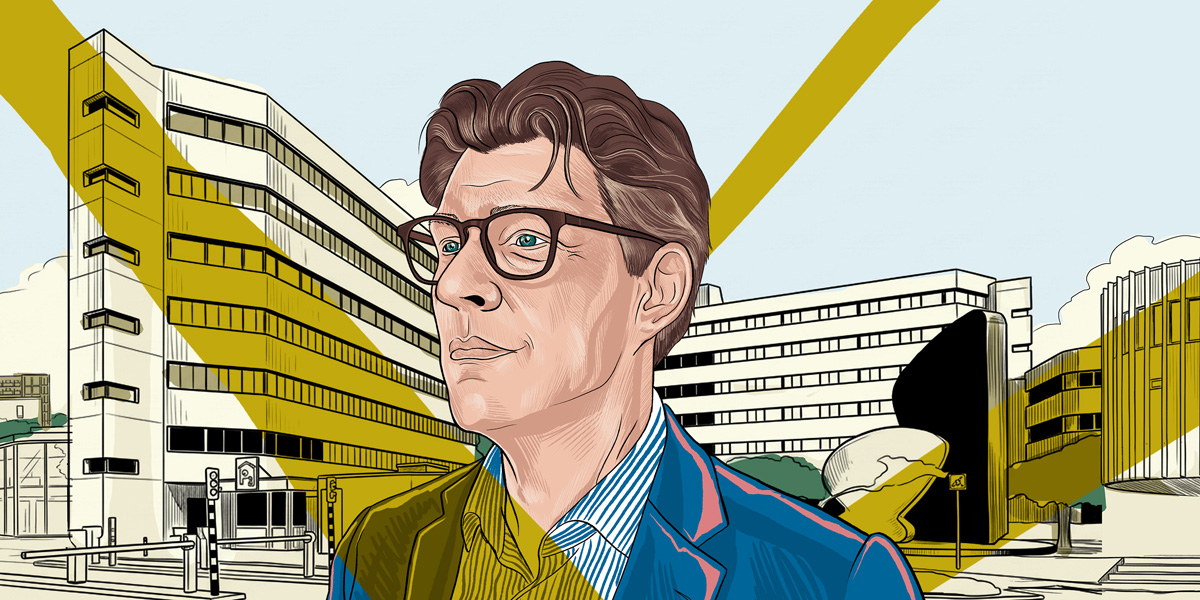
As CEO of Offices and Residential Europe at First Sponsor, Frans van Toor is involved in several acquisitions and developments in Amsterdam Southeast. He knows the area well and believes it is approaching a tipping point. ‘Almost all the conditions for success are already in place: Southeast is highly accessible, offers a wide range of amenities, and already has an established urban dynamic,’ he says. ‘At the same time, some of the existing buildings have become outdated and offer significant potential for improvement or redevelopment. That combination creates opportunities.’
First Sponsor has been active in Europe since 2014. The Netherlands served as its gateway to the rest of the continent and still accounts for the largest share of its portfolio. In Amsterdam, the company focuses on the city center, the Zuidas business district, and Southeast.
‘Almost all the conditions for success are already in place.’
First Sponsor’s arrival in Southeast was somewhat coincidental. ‘Our international investors were staying at the Holiday Inn while visiting another project in Amsterdam,’ Frans explains. ‘They wondered who owned the building and whether they could buy it.’ The hotel became First Sponsor’s first acquisition in the area. Other properties followed, including the Oliphant office building, and the company also began developing projects of its own, including Drive Tower and Live Tower.
Ahead of the curve
Frans believes Southeast stands out from many other development areas in Amsterdam because its transformation began earlier. While areas such as Sloterdijk remained largely monofunctional office districts for a long time, Southeast is further ahead in its transition. ‘The transformation into a mixed-use urban district started relatively early here.’
For evidence of how rapidly Southeast is changing, he simply points outside. ‘Just look at all those construction cranes. I think Southeast currently has more of them than anywhere else in Amsterdam, perhaps even anywhere in the Netherlands. And they’re certainly not all ours.’
Quality attracts users
The office market is a key pillar for First Sponsor, and the company focuses exclusively on the upper end of the market. ‘Our philosophy is simple: invest in quality, and users will follow. No one wants their employees working in a poor-quality office.’
Frans sees Southeast becoming increasingly attractive to financial institutions and major corporations. He draws a parallel with Paris, where financial institutions moved from the central business district to well-connected locations on the outskirts of the city. With several major banks already based in Southeast, he sees potential for a similar shift.
‘The transformation into a mixed-use urban district started relatively early here.’
Accessibility is another major advantage. Southeast is well connected by multiple forms of public transportation as well as by car. There is also substantial parking capacity, particularly around the Johan Cruijff ArenA and other event venues. As more companies experience significant peaks in office attendance on certain days of the week, Southeast is relatively well equipped to accommodate them. That gives the area an advantage over locations where parking is both limited and expensive.
From office district to urban district
For Frans, the future of Southeast is about much more than offices. ‘By combining business uses with housing, green space, restaurants, healthcare and other amenities, you create activity at street level beyond office hours.’
First Sponsor is putting this mix into practice in its own projects. Around Drive Tower and Live Tower, an office and residential tower respectively, the company is developing high-quality amenities including a gym, restaurants and healthcare facilities. These are intended for both residents and office users and help bring more activity to the neighborhood.
That is also why Frans welcomes the residential development taking place in the central part of Southeast. ‘Our own Live Tower, along with other residential projects, should eventually create enough critical mass to turn the area into a genuinely attractive place to live.’
Room for investment
Frans also sees several challenges that could slow further development, particularly when it comes to policy and financial conditions. He advocates greater flexibility in the balance between social housing and other housing segments, especially when requirements are imposed at the individual-building level. ‘The right balance between living and working also requires a tailored approach. A mixed-use district doesn’t mean every project needs the same mix of functions. Offices and housing still need to be in balance.’
‘Just look at all those construction cranes. I think Southeast currently has more of them than anywhere else in Amsterdam.’
Ground lease conditions also deserve attention, he says. ‘Many ground lease agreements in Southeast date back to earlier phases of development. Uncertainty about new terms can affect investment decisions and slow down new developments.’
A city within the city
Frans expects Southeast to function as a strong, self-sustaining urban district within the next ten years. He sees the area around the ArenA developing into a truly mixed-use district, while areas toward Amstel III are likely to place greater emphasis on housing.
Looking further ahead, he sees even more potential. As the areas between Southeast and the rest of Amsterdam continue to develop rapidly, the perception of Southeast as separate from the city is beginning to fade. ‘Amsterdam used to expand canal by canal. Today, the ring roads are the new canals. The city continues to grow, and areas outside the historic center are increasingly becoming part of the wider metropolis and growing toward one another.’
Frans also sees a clear role for First Sponsor in that transformation: continuing to invest in a level of quality that attracts new users and residents to the area. ‘The foundations are already in place. The next step is to make sure the quality matches them seamlessly.’