Amsterdam-Zuidoost | Working
‘The future does not lie in a single function, but in the combination of many’
Erik de Rooij | Achmea
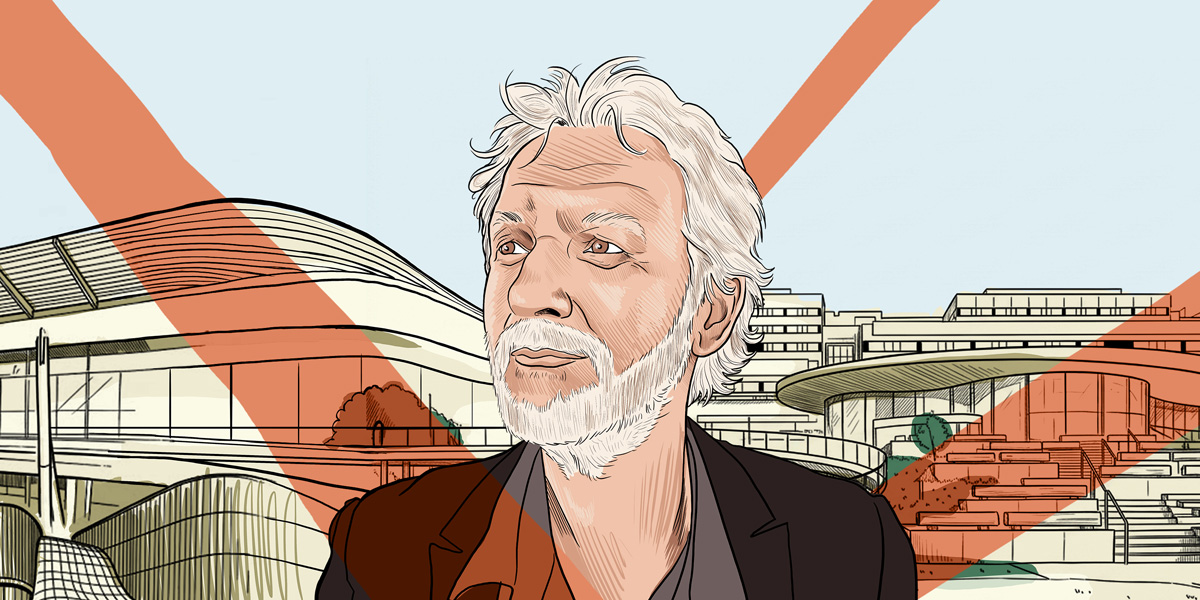
Throughout different stages of his career, Erik de Rooij witnessed the transformation of Amsterdam Southeast up close. Now, according to the Achmea asset manager, it is time for the next step. That step does not lie in more of the same, but in the continued development of a district where offices, housing, and hospitality reinforce one another. ‘A mixed-use area is more resilient and robust,’ he says. ‘That’s what I would fully invest in.’
Connected to Southeast
Erik’s ties to Amsterdam Southeast go back a long way. On his very first day at Jones Lang Wootton in 1988, he was put in charge of office buildings in the area. Southeast then faded into the background for a while, until his role at Achmea brought him back to the district years later.
When the insurer and financial services provider began searching for a new office location, Southeast quickly emerged as a strong contender. A few years later, when another relocation decision was on the table, the company once again chose the area.
“A mixed-use area is more resilient and robust.”
‘Accessibility was the deciding factor both times,’ he explains. ‘From here, key destinations across the Randstad are easy to reach by public transport. Road connections and parking facilities are also strong compared to other office locations.’
An area in transition
Anyone walking through Amsterdam Southeast can clearly see that the area is changing, according to De Rooij. Construction cranes are everywhere, new residential developments are taking shape, and the atmosphere is noticeably different from just a few years ago.
Yet, the area's development is far from complete. Outside office hours, the area still lacks a sense of vibrancy, in his view. The route between offices and the station can feel uninviting in certain places, even though the period after working hours is crucial to a neighbourhood’s appeal.
“Key destinations across the Randstad are easy to reach by public transport.”
This presents an important challenge. ‘An area can function perfectly well as a business district, but it only truly becomes a city centre when people want to stay there; when colleagues have lunch together, neighbours meet one another, and visitors enjoy spending time there.’
The power of the mix
This idea lies at the heart of his vision for Amsterdam Southeast. ‘The future does not lie in further specialisation, but in diversification. Housing, offices, hospitality, hotels, amenities, and small businesses all strengthen each other.’
His conviction is shaped not only by future ambitions, but also by lessons from the past. Around 2010, Amsterdam Southeast faced high vacancy levels. For Erik, that period demonstrated how vulnerable an area can become when it depends too heavily on a single function.
That is why he advocates for a conscious integration of different uses. Not all offices clustered around the station and all housing pushed to the edges, but an area where multiple functions coexist side by side.
He also sees room for smaller businesses. ‘More and more creative and innovative companies are being pushed out of the city centre by rising rents. Amsterdam Southeast can provide space for these businesses, bringing a different kind of energy to the area.’
More than an office district
According to Erik, there is also an opportunity to elevate local amenities to a higher level. In particular, he sees room for improvement in the hospitality offering. Much of the current supply is geared towards visitors of venues such as the Ziggo Dome and Johan Cruijff ArenA, whereas business users have different needs.
“It only truly becomes a city centre when people want to stay there.”
Making better use of existing amenities is one of the easiest opportunities. Many office buildings contain company restaurants that are only heavily used for a few hours each day. By opening these facilities to a wider audience, he believes the area can become more vibrant while also improving the quality and variety of available services.
He also sees significant potential for hotels. The combination of major events, office space, and excellent accessibility makes overnight stays in Amsterdam Southeast more logical than many people assume. In addition, it could help create a better distribution of visitors across Amsterdam.
A more attractive urban district
When Erik looks ten years ahead, he does not think about new towers or additional square metres. Instead, he envisions an area where people genuinely enjoy spending time, even outside working hours. More green space, greater variety, and more activity at street level. That is why his message is clear: ‘The future of Amsterdam Southeast does not lie in a single function, but in the combination of many.’