Amsterdam Zuidoost | Working
‘The Zuidoost office market has entered a new phase’
Ewout Frima | CBRE
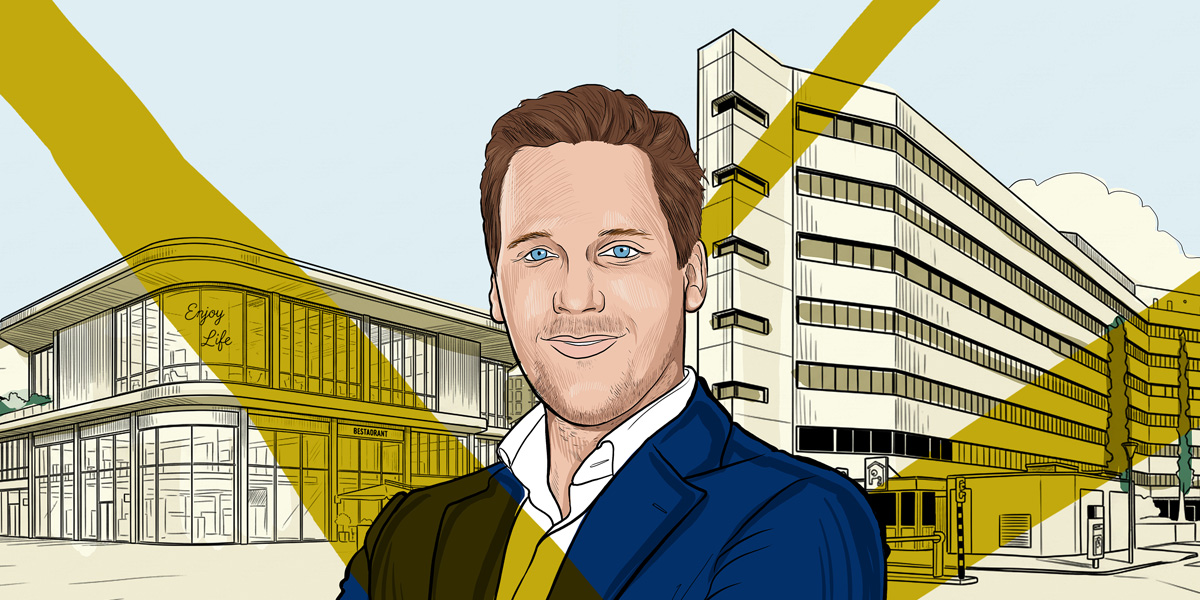
As a senior director on CBRE’s office team, Ewout Frima has followed the Amsterdam-Zuidoost office market closely for seventeen years. Over that time, he has seen the area change considerably. Companies once chose Zuidoost primarily as an affordable location for their back-office operations, but today, he sees interest coming from a much broader range of businesses. ‘Technology companies, financial services firms, life sciences companies, and start-ups and scale-ups are reshaping the area’s economic profile,’ he says. ‘Zuidoost has clearly entered a new phase.’
As a senior director on CBRE’s office team, Ewout Frima has followed the Amsterdam-Zuidoost office market closely for seventeen years. Over that time, he has seen the area change considerably. Companies once chose Zuidoost primarily as an affordable location for their back-office operations, but today, he sees interest coming from a much broader range of businesses. ‘Technology companies, financial services firms, life sciences companies, and start-ups and scale-ups are reshaping the area’s economic profile,’ he says. ‘Zuidoost has clearly entered a new phase.’
A shift in how the area is valued
When Ewout first started working in Zuidoost, the area had a very different position in the office market. Corporate headquarters were rarely located there; instead, the area was primarily home to support functions. For him, the broader and higher-quality mix of companies now choosing Zuidoost is an important sign that the area is taking on a new role in Amsterdam’s office market.
‘I think the companies that are still hesitant about Zuidoost today will look back in five years and say: we should have made that move sooner.’
Rental trends reinforce that shift. The gap with other Amsterdam office districts is narrowing. For Ewout, this is above all a sign of how perceptions of the area are changing: a location that once competed primarily on price is increasingly being chosen for the qualities it offers as a business location.
The city moves closer
That transformation is closely tied to what is happening outside the office buildings. Large-scale housing development and the transformation of the area are increasingly turning Zuidoost into a mixed-use urban district where people live as well as work. Ewout sees this as one of the biggest opportunities for the years ahead.
‘The next phase isn’t just about real estate value. It’s also about the quality of the urban environment we create.’
‘An important next step is improving the quality of the public realm,’ he says. ‘More green space and greater attention to the spaces between buildings can make the area not only a place to work, but also a more attractive place to spend time.’ He sees the future Hondsrugpark as a crucial part of that transformation.
That also means new developments need to reflect Zuidoost’s identity. New homes, businesses, and employees bring opportunities, but Ewout believes it is important for the area’s existing cultural character to remain part of that transformation. ‘The next phase isn’t just about real estate value. It’s also about the quality of the urban environment we create.’
A larger share
Ewout is clear about what this could mean for Amsterdam’s office market. In 2026, Zuidoost already accounts for 23% of total office take-up in Amsterdam, up from 16.5% in 2025 and above the ten-year average of 19.8%. The shift is happening faster than previously expected. ‘That shows that more and more companies are finding their way to Zuidoost.’
‘The next few years will determine the role Zuidoost ultimately plays within Amsterdam.’
Whether that momentum continues, Ewout says, depends on more than the supply of office space. The quality of the surrounding area matters just as much. ‘The attractiveness of the area as a whole will ultimately determine which companies choose Zuidoost and decide to stay. That’s why new housing, more green space, amenities, and continued investment in the public realm all matter to the office market as well.’
Tipping point
Not all of that potential will be realized automatically, Ewout emphasizes. In his view, Zuidoost is at a tipping point. ‘Much of the change is already visible, but a significant part of the area’s transformation still lies ahead. The next few years will determine the role Zuidoost ultimately plays within Amsterdam.’
That’s why he believes the area should continue to strengthen its international economic profile while creating an environment where offices, housing, amenities, and green space increasingly come together.