Amsterdam-Zuidoost | Area Development
‘Temporary spaces should be a stepping stone’
Angelo Bromet | Prospect Eleven
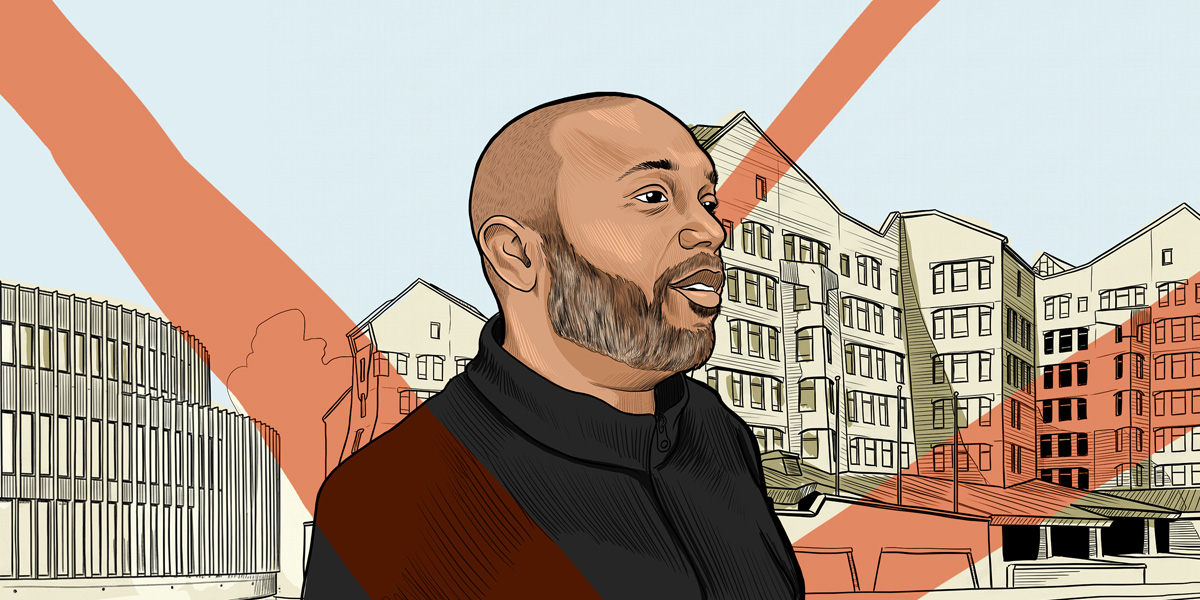
Angelo Bromet was born and raised in Amsterdam-Zuidoost and now lives there again. Through his consultancy, Prospect Eleven, he works at the intersection of community and urban development. He sees how local entrepreneurs are often given temporary space to establish themselves, but then struggle to make the transition to a permanent location. To him, that is a missed opportunity. ‘Temporary spaces should be a stepping stone: a place to build momentum before moving on to something permanent.’
In his view, that is an important challenge for Zuidoost. Affordable temporary space can help entrepreneurs get started, but building a sustainable business takes more: affordable space to grow into, longer-term leases, and a viable business model. ‘You can’t just give entrepreneurs a place to get started,’ he emphasizes. ‘You also have to think about what comes next.’
From temporary to permanent
Angelo saw firsthand what can go wrong on Karspeldreef. Local entrepreneurs were given temporary space there and built something valuable, but ultimately had to leave. ‘That place gave them a story, but no foundation.’ For him, temporary use only works if there is a clear path forward from the start.
That takes more than low, subsidized rent. Entrepreneurs need to be able to invest in staff, equipment, and building their visibility. That means rents that remain affordable over the longer term and leases that provide enough security. ‘Otherwise, you’re not teaching entrepreneurs how to build a business. You’re mainly teaching them how to survive in a temporary situation.’
‘You can’t just give entrepreneurs a place to get started. You also have to think about what comes next.’
He also sees a role for developers. Giving local entrepreneurs a permanent place sometimes means taking a different approach to the business case rather than leasing every square foot at the highest possible market rent. ‘Ultimately, the value also lies in what those entrepreneurs bring to the area. It’s not just about the money.’
Think beyond the plot
That brings him to a more fundamental challenge. ‘Every developer understandably looks at their own site first, but successful individual developments don’t automatically add up to a successful district. Creating space for affordable entrepreneurship and an inclusive mix of uses requires coordination at a broader level.’
As an example, he points to a model in which some commercial space is made available to community-focused or impact-driven entrepreneurs at a lower rate, while other spaces help offset the cost. That becomes difficult when every project is expected to make its own business case work independently. ‘You need a vision for the district as a whole. You can’t create that mix one site at a time.’
For Angelo, timing is crucial. Many developments in Zuidoost are still underway, which means there is still room to make choices. ‘This is the moment to create an inclusive environment that people will actually experience when they walk through the neighborhood. Let’s just do it now. We have nothing to lose.’
A reason to cross over
Angelo also considers how different parts of Zuidoost are connected through the way people use the area. He doesn’t see the railway itself as the biggest barrier. A new tunnel or a more attractive route can help, but that alone won’t make people cross to the other side. ‘The real question is: what’s over there for me?’
He believes more deliberate choices can be made about what draws people from one part of Zuidoost to another. A cultural market on one side, or specific stores and other attractive amenities on the other, can genuinely encourage people to move between them. ‘Someone looking for a specific papaya will cross the tracks if that’s where they can find it. In the same way, new residents need reasons to explore the existing parts of Zuidoost.’
‘Ultimately, the value also lies in what those entrepreneurs bring to the area. It’s not just about the money.’
That kind of exchange doesn’t happen automatically. ‘You have to plan for it and make it happen.’ For Angelo, real connection is therefore not just about infrastructure, but about giving residents, visitors, and entrepreneurs reasons to engage with both sides of the railway.
The story has to be true
Through Prospect Eleven, Angelo is also involved in shaping how Zuidoost presents itself to the outside world. For him, authenticity goes beyond communication. An inclusive campaign means little if visitors or new residents encounter a very different reality when they experience the area for themselves.
Local entrepreneurs, in particular, can help tell a story that is unique to Zuidoost. He points to the example of a Ghanaian entrepreneur who runs a specialty spice shop. ‘A business like that can draw people from outside Zuidoost, but only if it’s easy to find, has enough visibility, and is given room to grow. That takes much more than an attractive façade.’
‘Let’s just do it now. We have nothing to lose.’
That’s why Angelo cautions against simply copying concepts that have worked elsewhere. Zuidoost has a different history and demographic makeup, and is experiencing a different kind of demographic change than, for example, Amsterdam-Noord. New concepts are welcome, but in his view, they need to build on what is already there and reflect the people who already call the area home.
An environment that stays theirs
Angelo’s connection to this development is personal. He deliberately moved back to Zuidoost so his children could grow up connected to their own culture. Through Prospect Eleven, he has spent years working on the same question: how do you connect the area’s major developments with the people and entrepreneurs who don’t automatically have a seat at the table?
Looking ahead, he sees both opportunity and urgency. He believes the ArenA area can develop into Zuidoost’s urban center, while new housing can give residents the opportunity to move through different stages of life without having to leave the area. But for him, the most important thing isn’t having a supermarket around the corner or any single new amenity. ‘It’s about creating an environment that feels like theirs and can continue to feel that way for their children.’