Amsterdam-Zuidoost | Leisure
‘Strengthen existing culture and create space for talent’
Otmar Watson | Untold Foundation
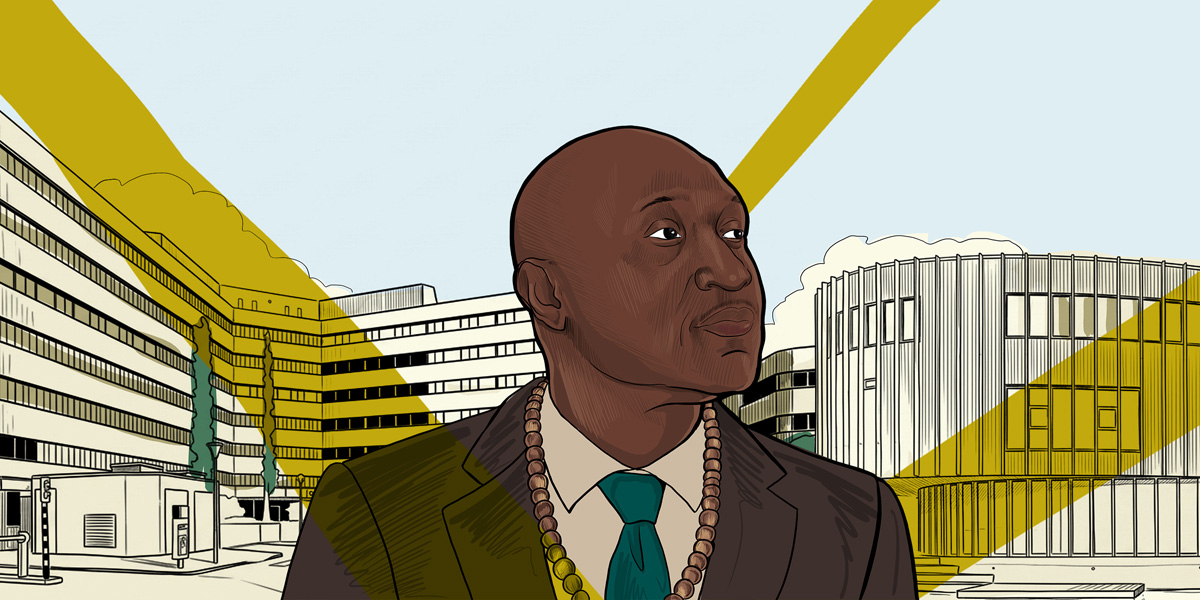
Otmar Watson's connection to Zuidoost extends far beyond his work as Director of the Untold Foundation. He lives there, has been active in the district for more than thirty years, and has witnessed firsthand the area's strong appeal. He knows plenty of examples of former residents who regularly return to visit their trusted barber or purchase specific ingredients. Others continue to come back for family gatherings, celebrations and cultural activities. ‘Leaving Southeast does not automatically mean leaving the community behind.’
This deep connection to Southeast is also a central theme for Untold. The foundation is one of the resident companies of the Bijlmer Parktheater and focuses on arts, culture and talent development. Children, young people and adults engage among others with African dance styles, music and theatre.
Creating space for talent
According to Otmar, the cultural identity of Southeast does not reside in organisations or buildings, but in its people. ‘Young people come from outside the district to rehearse, dance, practise hip-hop or perform in musicals,’ he says. ‘But that appeal can only be sustained if there continues to be sufficient space for culture and talent development.’
‘Leaving Southeast does not automatically mean leaving the community behind.’
He points to the changing role of NoLIMIT as an example. For many years, the venue provided space for theatre, music studios, a performance stage and talent development, attracting young people from across Amsterdam and far beyond. In 2014, NoLIMIT was given a different purpose, with arts, culture and programming for creative makers and emerging talent no longer at its core. ‘That is a function I still miss today.’
Nevertheless, Otmar sees encouraging signs of renewal. He highlights the expansion of the Bijlmer Parktheater and residential developments around Dapperdreef, where cultural and social functions are being integrated into the buildings. For him, this is an important signal: ‘Culture should not be added as an afterthought. It should be part of the plans from the very beginning.’
Creating benefits for residents
Amsterdam Southeast is growing rapidly, and Otmar sees both the opportunities and the challenges that come with that growth. In principle, he is positive about attracting more residents and visitors, as long as the supporting infrastructure is developed accordingly. More importantly, however, he believes the key question is who will still have a place in the district in the future. ‘People who were born and raised here are increasingly moving to places like Zaanstad, Purmerend or Almere because they can no longer find affordable housing.’
‘Culture should not be added as an afterthought. It should be part of the plans from the very beginning.’
In his view, the development of the district should not focus solely on what is being added. ‘It is equally important to consider what is already here and who already lives here,’ he emphasises. That is why he believes existing neighbourhoods should share in the benefits of ongoing investment. “That means investing in local amenities, but also ensuring that young people growing up in Zuidoost today can still find a home here in the future.”
The voices of Southeast
That also means giving residents a voice in shaping change. Otmar lives in Southeast himself, has worked there for decades and closely follows the district’s development. He feels residents are not sufficiently involved in plans affecting their own living environment.
‘Cherish what is already there and create space for what has yet to emerge.’
That does not mean residents should make every decision, he clarifies, but they can contribute. ‘Area development is ultimately about ownership and a sense of belonging. Many of us were born and raised here and want to stay. These people are the constant factor and can help create a pleasant living environment.’
According to Otmar, the future of Southeast does not lie in reinventing the district. Its appeal already exists: in its communities, cultural identity and the talent that continues to attract people from beyond the area’s boundaries. His advice is clear: ‘Cherish what is already there and create space for what has yet to emerge.’