Amsterdam Zuidoost | Living
‘Create opportunities for residents at every stage of life in Zuidoost’
Eefje Voogd | Founder Eefje Voogd Makelaardij from CBRE
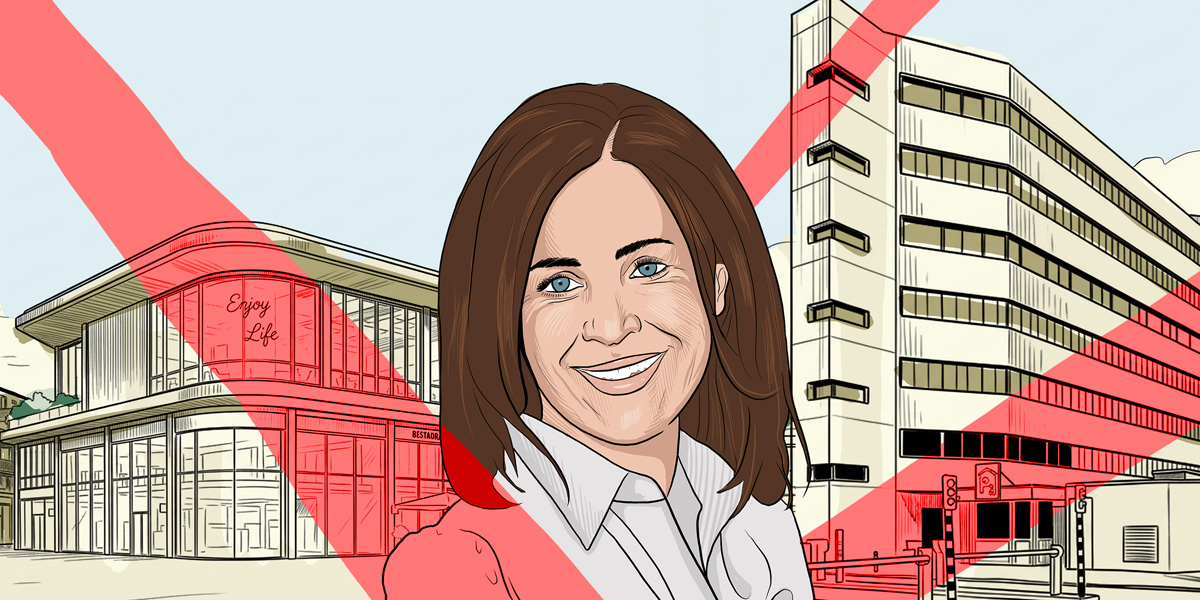
Eefje Voogd grew up largely in Amsterdam-Zuidoost and has now spent more than 40 years working in the real estate sector. She has witnessed neighborhoods evolve, housing supply expand, and several generations of residents grow older. Looking ahead to the next phase of development, she argues that the focus should not only be on the number of homes delivered, but above all on creating the right housing mix. ‘You should be able to complete your entire housing journey in Zuidoost,’ she says. ‘Create a district where someone can find their first home, start a family and grow old happily.’
According to Eefje, that residential progression is not yet a given. First-time buyers, families and seniors all have different housing needs, while a balanced neighborhood requires all of these groups. She has experienced the lack of choice firsthand: her own father still lives in a ground-level family home in Zuidoost, but when the time comes to move to a more suitable type of housing, attractive options within the district are difficult to find.
Room for every stage of life
Current residential development is heavily focused on affordable, relatively small homes. Eefje stresses that these are urgently needed, but they are only part of the solution. ‘Larger family homes, homes for couples, senior housing and assisted-living residences are just as important in a mixed urban district.’
‘Create a district where someone can find their first home, start a family and grow old happily.’
Without that diversity, residents eventually have no opportunity to remain within their own neighborhood as their circumstances change. ‘That also affects the wider housing market. When older residents cannot find an attractive alternative, larger homes are less likely to become available for families.’
Eefje also sees room for the higher-end market. In her view, the sale of more expensive homes in Amstel III demonstrates clear demand. ‘There is definitely a market for it, but new supply must be carefully phased. The homes also need to offer the right qualities. Simply adding more square meters is not enough.’
Amenities from day one
A good home does not make an attractive living environment. Through her daily work, Eefje hears directly what prospective buyers want to know. Their questions are not only about the apartment itself, but also about the surrounding area. ‘When and where exactly will those amenities be delivered? And is there any guarantee that the area will feel vibrant?’
She takes those questions seriously because vibrancy cannot be taken for granted. On IJburg, for example, the first homes were completed years before the shopping center opened. According to Eefje, that is a pattern we should not repeat. ‘When shops, restaurants and other day-to-day amenities lag behind, it places a burden on the first residents and can slow the attractiveness of a new district.’
‘Larger family homes, homes for couples, senior housing and assisted-living residences are just as important in a mixed urban district.’
The same applies to green space. Eefje describes Hondsrugpark as an essential development that should be realized as quickly as possible. ‘Trees and other greenery take years to mature. Especially in a densely built-up area, investment in public space should never be an afterthought.’
Affordable does not mean cheap
Given the large number of homes that Zuidoost is expected to add, Eefje sees another risk: that cost-saving measures may ultimately come at the expense of residential quality. She notices a growing tendency towards highly efficient construction methods, increasingly uniform façades and floor plans with little variation. ‘That level of uniformity results in lower living quality,’ she emphasizes. ‘That is a real shame.’
Because urban development must stand the test of time for decades, quality is particularly important to her. ‘Affordability requires careful choices, but that does not mean every neighborhood should look the same. Density can lead to lower quality and therefore requires specific attention. The challenge is to combine the extensive housing development with attractive architecture, sufficient greenery and public space, active ground-floor uses and a strong human scale at street level.’
Learning from earlier urban expansions
Eefje’s long-standing connection to Zuidoost gives her a unique perspective. She grew up in Geerdinkhof and Liendenhof in Gaasperdam and spent part of her school years in the district. From the nineties onwards, she was involved as a real estate agent and adviser in the first phase of the Bijlmer urban renewal program. Today, she is once again working on bringing homes to market in the next phase of development.
As a result, she looks not only at where Zuidoost has come from, but also at the lessons learned from other major Amsterdam area developments. ‘Every new neighborhood needs time to mature, but many challenges are now well known. Delivering amenities too late, leaving ground-floor spaces vacant, offering insufficient diversity in housing types, or underestimating the importance of green space and public realm quality are all mistakes that do not need to be repeated.’
‘Affordability requires careful choices, but that does not mean every neighborhood should look the same.’
Good cooperation between developers is equally important. When each party follows its own schedule and program, homes, amenities and their market introduction can become poorly aligned and end up competing with one another. ‘A bit of coordination may not be standard practice, but it is certainly advisable.’ Eefje also sees a coordinating role for the municipality.
A place you want to go to
Despite these points of attention, Eefje is optimistic about the future of Zuidoost. According to her, the district’s excellent accessibility, relative affordability and the scale of current developments provide a unique starting position. She believes a new piece of city can emerge here, helping to absorb some of the pressure on Amsterdam’s historic center. Above all, she hopes both existing and future residents will enjoy a living environment they can be proud of. ‘A place you want to go to. Not leave.’